Transcript
Welcome to the Accessibility Abroad Podcast, a resource dedicated to disability and accessibility in education abroad. We share best practices and lived experiences to support program providers and participants alike.
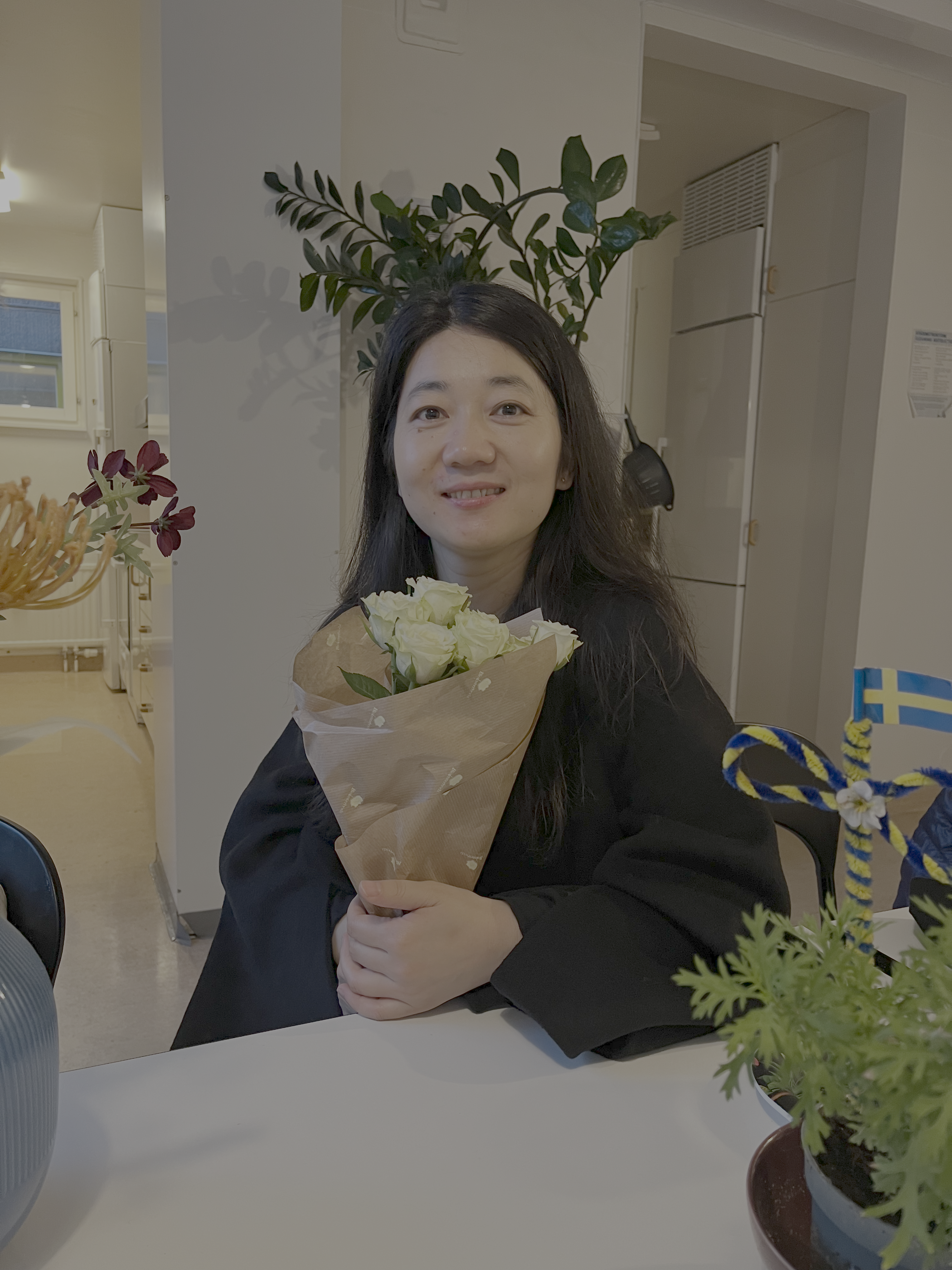
Inn this episode I spoke with Molly Zhang, a woman from Shanghai who earned a master’s degree in bilingualism at Stockholm University in Sweeden. We talked about her experience with physical disability and her takeaways around accessibility in Stockholm.
Justin
okay and i’m here with Molly Zhang and molly is from shanghai china currently in shanghai china and molly you studied abroad in sweden and wanted to tell us about that and when we were talking about it before one of the things you said to me was that you studied linguistics you earned a master’s degree in linguistics at Stockholm University in bilingualism, bilingualism. So where I’m from in the United States, I’m very used to hearing linguistics. If somebody does a degree in linguistics, but maybe it’s just because I’m not in that field. I didn’t really know that bilingualism is something that you can study within that. And I was looking at Stockholm University’s website. It says something like it’s the study of how people use and learn languages and how that’s affected by the social contexts. What drew you to that?
Molly
Yes, that’s my program. It’s just like, I think the program is more about the theory. That’s just like you said, you search for Stockholm University website. Yeah, it’s about how people use language, how people learn language. Yeah, that’s what we learned.
Justin
Yeah, I mean, how is that kind of, did that connect like with, I mean, you’re bilingual at least, you speak two languages at least here.
Molly
Laughs
Justin
I mean, does that kind of connect with it? Is that something that kind of always interested you?
Molly
Oh, yeah, kind of. When people hear bilingual or linguistics, they think that you may speak more than two languages, but actually not. yeah even when i can speak two language Chinese and English but actually no it’s not about my program um it’s just about how people use language … how people learn language … that doesn’t mean we have to speak more than two languages.
Actually at first when i applied for a program i didn’t know too much about this program so um what interests me about the program is how people can use two different languages in multilingual sites you know especially international education they are used by some students that they learned two different languages in school. For example in china at international schools people their students … they learned english right and also they lived in china and they speak chinese. I think that’s interesting seeing how how these people learn English so much.
That’s why I’m interested in this program at first, but when I came to learn this program for some time, I’m more interested about how people choose to learn one specific language. It is about capital… why people choose to speak a language. It is just like why so many people learn English, not French or Spanish. That’s something that I’m interested in. It’s about the linguistic capital.
Justin
That makes a lot of sense. I feel like there’s a lot of people in my country that view Chinese as a form of linguistic capital, something that can create financial opportunities for them.
Molly
Yeah. It’s the same, it’s the same. That’s why people learned English in China so crazy. Yeah, because we want to get linguistic capital and use linguistic capital to get more economic capital or social capital, just like that. But I’m not sure if there are some people in USA who learn Chinese.
Justin
I know that people are, and I’ve actually, I was just reviewing applications for the critical language scholarship, and I was struck by how many candidates have had Chinese all four years of high school in the United States. That really blew me away.
I am bilingual English, Spanish, and I wish I could say that I had an inspiring reason for learning Spanish over other languages. But the fact is that Spanish was pretty much the language that was available in high school and I was required to learn it. so I learned it but I can say though of linguistic capital my my linguistic capital story was when I was in a parking lot in Florida and I was lost looking for a restaurant and I asked a lady where it is and she can’t understand me so then I ask her in Spanish and she tells me the directions
Molly
yes yeah I know … maybe because there’s some Spanish speakers in USA so students in some states students are required to learn to speak Spanish but I’m not sure because I just get information from some papers
Justin
no I think you’re totally on the mark there. You know we have a lot of immigration from Spanish-speaking countries and I could say it’s definitely made a lot of sense for me to know those two languages and I’ve really enjoyed my experience studying and learning Spanish.
Molly
Yes, Spanish is also a very popular language in the world.
Justin
you’re also, you have a slight disability, You mentioned to me, like, you know, you have a disability, kind of involves difficulty ascending stairs, so it sounds like physical disability like do you use a walking cane or anything like that or any such device or … can you share more
Molly
oh yeah yes of course just like you said… I’m like this… uh disabled uh… actually i don’t need to sit in a wheelchair or need some tools to help me walk but in my in my daily life i really need elevators and ramps yeah just like we talked yesterday yeah because i i can’t climb upstairs uh easily yeah it’s very hard for me so in my daily life i need elevators and ramps to make my life easier. It’s even it’s not very very tough for me to walk outside but i still need these services
Justin
that makes sense. You’re from china and i think you’ve earned a master’s degree actually in china before you went to sweden of course you went to regular school what was that like when you would go to school
Molly
Yeah i studied in china for a long time for about 20 years in China and there were very few accessible infrastructure to be honest. So it was very hard for me to go to school and especially when my classroom was on a high floor like floor five or six or something like that and my accommodation was also in a very high floor like i remember very clearly my accommodation was in floor five. Yeah it was very hard for me to go up and down every day. It was several times one day so it’s very hard it was really hard but because no people realized that i need that because almost every student in the school they don’t need any service because they are not disabled.
Yeah even myself i didn’t realize that there was something called accessible infrastructure. Yeah i realized that this thing when i when i graduated and i i went to work i went to work that i realized that there’s something called accessible infrastructure. I just got information online because in my education nobody taught me about that so I realized oh I need that.
Justin
you said this was that a job you like you started at work and you were kind of researching online?
Molly
Yeah
Justin
Oh cool what kind of work was that
Molly
When I started to work I left school and I worked in big cities like in Shenzhen and Shanghai. Then I started to open up. I started to know something about that. Yeah, it’s nothing about the work it’s something about the big cities.
Justin
Being in big cities, you started to think more about elevators and escalators, the way things could be more accessible.
Molly
Yeah, I followed some disabled influences in China. They devote a lot to introduce accessible infrastructure. And I do some tests. It was very interesting that I started to learn that. Oh, that’s it. That’s what I need.
Justin
Oh, because, yeah, you kind of grew up in a smaller part of China.
Molly
Yeah, I grew up in a small village in China. A small village, yeah.
Justin
It sounds like you were like in a boarding school. You were saying your accommodation was on the fifth floor, your classes were on the sixth floor. So it sounds like was this a boarding school?
Molly
Yeah, boarding school since I was 13 years old.
Justin
13?
Molly
yeah, 13.
Justin
Makes sense, makes sense. And I guess that must have been also kind of when you started, when you kind of got to the big city and Tianjin, Shanghai, and you just started to think more about accessibility.
And I guess that’s kind of, that must have been maybe at some point along there, that was kind of when you started to kind of look at what might have been abroad. Because you mentioned to me, you were really drawn to Nordic countries when you kind of were looking for places to do a master’s degree abroad.
Molly
Yeah, because in small cities or small villages, no people talk about accessibility because nobody knows that. They just think that “oh you’re disabled” and it’s just about But there is no infrastructure for you because nobody knows that world.
Justin
Yeah. When you were talking about how in school and at your boarding school, you kind of mentioned, I thought I heard you say, like nobody really around really knew of what an accommodation for you, meaning like an adjustment, what it might have looked like as far as to support you to go upstairs and downstairs. Or, you know, maybe an adjustment would have been moving a classroom to a different floor. Yeah, no. It got me thinking, like, you know, in my, it’s, it’s, I used to advise professionals on supporting students on study abroad programs where you’ve got a lot of, you know, there’d be a lot of walking around on these programs, a lot of using transportation. And it was always really easy to explain a completely non-disabled student who walks and doesn’t need anything. It is really easy to explain a student who uses a wheelchair. But it was really hard for them to imagine a student, what I’d call a student with limited mobility, or a student who doesn’t really, like they don’t use a wheelchair. They don’t really look different, really. but there is something a little different about them in terms of how far they could walk or what kinds of things they could walk on.
Molly
Yeah that’s true yeah yeah because you don’t sit in your chair or something like that so they may don’t think that you need that. Or especially in China even though they know that you are disabled you have limited mobility but they never think about that because they don’t think that there’s something they needed to do to give you support.
Justin
Yeah. And what was it sounded like you kind of found something a little bit different when you studied abroad in Sweden. I mean, what was it like there?
Molly
It’s a very great place for disabled people to live and study because there is accessible infrastructure everywhere. There are elevators and ramps in school and everywhere, especially in subway stations. You don’t need to worry about going outside. It’s very convenient. I did not need to worry about going outside because it’s very convenient. Yeah, I can go anywhere I want.
Justin
It’s interesting, you said I could just go anywhere I want. I mean, was that really notably different? I mean, do you find like you were used to just maybe, I don’t know, compromising in some places, like maybe I’ll avoid this neighborhood or I’ll take a taxi here instead of walking like was that any different?
Molly
Oh no actually I never took it. I have never taken a taxi in Sweden because it’s very expensive, but there is the subway station there are elevators. I don’t need to worry about that and their buses were very friendly to disabled people. So you don’t need to worry about that
Justin
nice nice do you ever take taxis when you’re in shanghai
Molly
Yeah of course
Justin
I have a blind friend in mexico he takes taxis everywhere. I feel like i i’ve known a lot of blind people who it seems like they lean quite heavily on either taxis or uber or Didi
Molly
uh yeah it’s much convenient if you take taxi in shanghai it’s the same. If you take a subway uh it’s still you know you do because there are no elevators in every subway station sometimes especially in old subway stations you have to climb down, then up without elevators it’s hard it’s still hard
Justin
Or even if there’s an elevator like it could be closed
Molly
right yeah yeah yeah especially in some old stations i remember that one time i it takes me about 20… more than 10 minutes you know to transfer from line nine to another line. To line eleven maybe because you had to walk a long time and you have to go up and down.
Sometimes just when I have to take a long time to go up and down in the subway station I just think that oh I should take a taxi not to take the subway.
Justin
yeah no exactly that’s what I was thinking like sometimes I’ve I’ve always kind of been struck by you know taxis can be how people sometimes use taxis to kind of skip over some of those inconveniences. I’ve done that a little bit too its kind of a way to buy your way out of what otherwise would be kind of an undignified experience.
Molly
Yeah
Justin
You mentioned taking the bus in stockholm what’s it like for you like normally when you take a bus, and what was it like there
Molly
You know I don’t sit in a wheelchair yeah but in sweden on the bus there’s a spot for disabled people who sit in a wheelchair you know the space was enough for them. Even i don’t need that. But because the bus wasn’t crowded, it’s still convenient for me to take the bus.
Justin
Could you explain more like how how it was convenient
Molly
um the space was more uh was you know i don’t know how to say was large.
Justin
There’s more space
Molly
yeah more space because it was in the bus and it was it was not crowded you know that in China the bus was full of people it was so crowded that I because I can’t stand you know for a long time and I can’t stand for a long time so it’s not that convenient for me to take a bus in China because it’s full of people and I have to stand for a long time but it’s hard for me but in sweden because there are more spaces uh they’re not crowded yes so it’s it’s i think it’s a friendly for me
Justin
i remember when i studied abroad in chile as a young guy it used to always bother me when people would give up their seats for me because you know i i mean i was pretty strong when I was younger. I could, you know, walk and do everything as far as physical stuff. I just couldn’t see well, but I did use a cane and it was visible therefore that I had a disability. And so people would very readily offer me a seat. And then I remember later in the year, I took a few falls and hurt my knees, kind of wore down my knees a little bit. Suddenly I had knee pain and I’d get on the Metro and I kind of would wish that people would give up their seats for me. and there were many times when they did and I was really grateful for it but it also was kind of funny because they were giving up their seat for me not because I had a bad knee but because I looked blind.
It was making me think about maybe you should like carry a cane with you even if you don’t like need to support yourself on it maybe people like if they see you with a cane they’ll be more likely to give up their seats what do you think?
Molly
I had a a similar experience like you but different because you know I don’t sit in a wheelchair, so some people they don’t realize that I’m disabled, but sometimes I really need to sit. I remember in Stockholm one time I took the bus. I just sat on a seat and I remember I was sleeping and one old man just to you know just spoke Swedish with me but I couldn’t understand. Oh then I realized that then he spoke English with me and told me to give up the seat for him because he was old. You know I was shocked!
Justin
Oh he asked you to give up your seat
Molly
right yeah
Justin
Did you?
Molly
Yeah!
Justin
You felt ashamed?
Molly
yeah i gave up my seat because he spoke loudly and you know i just had one or two stops to my destination so I gave up my space.
Justin
I’m glad you only had a couple of stops left.
Molly
Yeah and he told me oh you you’re young … I’m old you should give a seat to me.
Justin
Tell him I just look young on the outside.
Molly
yeah so sometimes because i’m you know that um they don’t realize you’re a disabled person they don’t realize you need to sit.
Justin
Gotta get yourself a shawl and a pair of glasses you know maybe a wig
Molly
It’s so it’s so funny
Justin
You saw a lot of other students too that had disabilities in Stockholm right?
Molly
Yeah.
Justin
Tell us about that.
Molly
Oh yeah I remember I can see many disabled students. Yeah I can see it’s normal to see disabled students in the university no matter if you can see some students in a wheelchair or you know some blind students there yeah it’s very it’s very common to see them i remember very clearly that the first day i arrived in Stockholm university campus i i don’t i didn’t know how to go to my classroom and but there were very very very few people there and they were just There was only one blind girl there. I don’t know if I should ask her to help me, but there were no people there. So I had to ask her if you could take me to my classroom. And you know that she did it. She really took me to my classroom. I was shocked. I don’t know how she could make it. Yeah, but she did it.
Justin
That’s such a great story. I’m always flattered when people ask me for directions, but I always do sense it that I’m like, if somebody’s asking me, I’m probably the last guy they feel comfortable asking. But it is always satisfying when I can tell someone how to get somewhere.
so I’m glad she was able to help you out. And I know you also saw like, even like, you know, you got to, did you ever have a chance to like, I don’t know, interact with any students? Like, I know you mentioned like that they had an office for students with disabilities to support with accessibility needs. I know you didn’t really need any direct support from that office that most of the accommodations you needed were kind of just in the built environment. But did you ever have any other interactions with other students with disabilities or like go to any social gatherings or anything like that?
Molly
To be honest, not too much because the foreigners and international students we don’t have a lot of opportunities to, you know, to socialize. But sometimes I did some observation to observe how they started in the university because it’s something new to me that I can learn something new. and I just like I shared yesterday there was one Swedish girl in my classroom she was in she was in a wheelchair and we we we sat very closely when in a class in a classroom so sometimes after class we had a very simple conversation and she had a dog with her in the classroom. We talked about her dog and she shared some things about her dog. And she was very confident you know when she shared about her dog with me yeah she was very confident and you know uh she did some knitting after class and i just asked her “oh you you’re like knitting” and she she told me oh the doctor asked me to do some knitting to help me because you know her hands were not that convenient so she told me that the doctor asked her to do some knitting to to have her fingers to be more flexible. Everything is just so natural and confident. It’s just something ordinary.
Justin
I was just thinking, you know, some people too, knitting can be good. I’ve met a lot of people who like knitting to kind of focus on things. Sometimes people find they engage better in a lecture even when they’re knitting. Their hands are busy doing something, you know.
Molly
no she didn’t do knitting in the lectures… after lecture. Because her fingers you know were not that flexible so there she said the doctor asked her to do some knitting
Justin
Yeah keeping the flexibility up in her hands makes sense
Molly
that’s it and the teachers are very nice to her. When she and her dog are in her classroom everything is it’s normal for teachers and just that nobody thinking it’s something special
Justin
yeah nobody thought she was inspiring
Molly
Yeah can you imagine that. yeah yeah you know that if you’re in China and you had a dog in the classroom. My god, that’s, I can’t imagine that everybody would look at you, … stare at you.
Justin
They’d only stare? They wouldn’t ask you to leave?
Molly
Yeah, that’s true. Yeah, it’s impossible for you to, you know, to take your dog in the classroom. Everywhere they stare at you. This bothered me a lot when I was walking in the street that, you know, sometimes, yeah. Sometimes people stare at me. That makes me very uncomfortable.
Justin
Because maybe you don’t use an assistive device, but you kind of look different when you walk?
Molly
Yeah, yeah, that’s true. Yeah, they just stare at you. Sometimes some people, they were so rude and they just walked in front of you and said, oh, what’s wrong with your leg? What’s wrong with your foot? Something like that. Oh, what a pity.
Justin
I remember many years ago, this was when I was a kid. I was sitting in my mom’s office because my mom had a small business and she had an office in the downtown, the downtown of the city where we were from. And an associate, a business partner of my mom, comes walking in through the office, takes a look at me. He’s like, oh, you got in a fight at school? Oh, poor kid. And what he was looking at was that my eye looked different, you know, because I have glaucoma and my eye looks fogged over. And so it looked to him like I had a black eye, like someone punched me in the eye.
Molly
Yeah, that’s annoying, you know, sometimes people say things like that…
Justin
I mean, people never asked you any questions in Sweden at all?
Molly
Some people ask me questions about that but when yeah… I can say… when we get familiar with each other in my accommodation I remember when one European girl asked me question about that because she got hurt for one or two months and she just said that it was very hard for her to walk when she got hurt that time and she asked me how I manage my life
Justin
oh yeah…
Molly
they just think that yeah And one of my friends said to me that our life is so hard for us. I can’t even imagine how hard it could be for you.
Justin
Yes. Yes. Sometimes I sort of feel bothered when it feels like people are asking me about my disability as a way to feel better about themselves. And sometimes I feel like I just wonder if the role of people with apparent disabilities in the world is to sort of provide spiritual motivation for others. I don’t know. I just always …
Molly
I had the same feeling. You know, sometimes I’m just wondering why I live in the world. you know. I don’t know the purpose of my life. Why I live in the world. It is so hard for me to live in the world. I sometimes just want to give up. You know it is so hard. Yeah what’s the purpose of my life
Justin
yeah and I mean … you share it’s always kind of been that way and kind of through all that you got at least as far as I can count like two master’s degrees and you earned a master’s degree abroad and you know you’re pursuing work you know and all that and doing all this stuff um you must find a motivation. I was just thinking the other day about this like I I just read something recently in an email and this is crazy because I’m not very religious at all, but I was reading from this Christian writer and he says that the reason why work is important is that God made man in his image and that God is a creator. And therefore he intended that man being created in his image would also be a creator. And it just got me thinking like, maybe there’s some way to tap into like a higher reason for work, you know, like in the United States, you know, for work, we’re all about, you know, I work because I want to earn money or I work because I want to advance. I want to be the boss one day. I want to grow my salary. It just got me thinking about that quote that gosh, like, you know, what if, what if you find like, it’s such a battle for you to get those things through work? Like, is, is there some kind of a higher purpose that work can bring that work has for us and that, you know, that we have for the world.
Molly
Yeah it’s hard yeah sometimes i just get very frustrated and very very down and just question about the purpose of our life
Justin
yeah i can definitely relate. Well anything anything else you want to that we didn’t cover that you think that we should Molly
Molly
I just want to I want to share I just want to talk about inclusion and support for us. I just want people to know that we need support, we need inclusive environment. Yeah. I don’t know if some Chinese audience can listen to this podcast.
Justin
I hope so. And I mean, we’re going to have a transcript too. And so if somebody needs to be able to translate it to Chinese or some other language, then it’ll be that the English transcript will be there that can be transcribed.
Molly
So, yeah, I hope so. Yeah, I hope some Chinese audience can listen to this podcast because I hope people know that, to know that how important it is for us to have, to, you know, to live in an inclusive and supportive environment and what we need as a disabled people in China. And also, I also hope that some disabled students, if they want to study abroad, they can get more information.
Justin
For sure. Yeah, I’m glad that, you know, I’m glad you brought that up. I mean, I was just after our first meeting, you know, I was just thinking a lot, thinking about you and like how, you know, like you’re not like, I don’t know if I’m going to be like offensive because I know sometimes people with kind of moderate disabilities feel a little bit like, oh, I don’t know if I really have a disability. I mean, like you’re not really that disabled, really, at least like in sort of like if you were in the United States or of course you know you were in Sweden it’s almost like you know your disability almost like would be kind of a moot point you know and then you were telling me about how it really you know has impacted you and your ability to like kind of go places and even like find jobs where you’re at you know and I so yeah it’s just like it your comments about the environment how the environment is kind of disabling it they seem poignant to that
Molly
you know that’s something that bothers me that you know sometimes you’re not sitting in a wheelchair or just like you said yeah but i’m still i’m disabled. Even now you know I’m not in a wheelchair I’m disabled and I can’t walk normally I can’t walk a long time and when I walk I seem different from other people. Yeah and you know because of disability it makes my education and my work more difficult. That’s really a problem
Justin
It sounds like kind of what you’re trying to say is you know you still would be pretty impacted even if you were if we pluck you up and drop you into sweden and you know you’re pursuing your life there like it’d be kind of similar for you
Molly
Yeah, I think it is impacted.
Justin
Yeah, I respect that.
Molly
Yeah.
Justin
That makes a lot of sense.
Molly
Yeah. I don’t know. Yeah, actually, after coming back to Shanghai, when I look back to the three years of staying in Sweden, I just think about the purpose of studying in Sweden because life did not change. It is still hard, you know, that is still hard for me. But I think the three years was very, very, you know, very different for me because I think I lived in a good country…, I lived in a good country in a very inclusive environment which is totally different from China. That’s very special for me. I shall cherish it.
Justin
You’ll cherish it for the rest of your life, right?
Molly
Yeah
Justin
and maybe you’ll even make some changes in China too.
Molly
I’m not sure. I hope.
Justin
You hope so…
Molly
Yeah. Just, I think the thing is that, oh, you know that what your good society should look like. Yeah, you know that people like you in other countries can get support. You know. You know that. And you know that you should get support.
Justin
Exactly. Yeah, I mean, it’s uh exactly it’s something you have a right to right I mean everybody yeah has a right to you know have an opportunity to pursue a good life you know that’s true yeah without being kind of held back by arbitrary barriers right I mean okay like maybe I’m not going to be a physicist because I’m not good at math no matter what you do even if you put it all in braille or whatever but like but we shouldn’t be held back by like arbitrary barriers you know like i couldn’t apply for the job because there was no elevator you know that’s silly
Molly
yeah that’s true yeah that’s only because they think that you’re disabled that you are not able to do the job That’s so i don’t want to remember… sometimes i don’t want to you know remember… some bad experiences in my life.
Justin
Some things are better to forget.
Molly
Yeah, I just want to forget.
Justin
Go home and have a cup of your favorite tea and watch some shows.
Molly
Well its good to have an opportunity to discuss the disability and some things like that with you because I don’t have people to talk about it… because they’re not disabled
Justin
well it’s been fun talking about it with you and Molly I really appreciate you you know you joining us for this interview and uh yeah it’s been a lot of fun
Molly
yeah i appreciate that i can have this opportunity yeah thank you
Conclusion
This concludes today’s episode of the Accessibility Abroad Podcast. We invite you to share it with colleagues and students, and to explore additional resources at accessibilityabroad.com.
Leave a Reply